Pay in installments of $6.56 with
 ,
,
 and
and

Shipping Estimate
USA
- USA
- CAN
- USA
- CAN
Ships within 48 hours · Estimated delivery Jun 30 - Jul 5
 Promo Codes Available:
For Your Every Summer RSVP, with Code: SUMMER15
Description
watermelon potted plant Peperomia argyreiaPeperomia argyreia Peperomia argyreia, commonly known as Watermelon Peperomia, is a small tropical foliage plant with rounded leaves held on slim reddish petioles. Each leaf has a peltate attachment, with the petiole meeting the underside of the blade rather than the edge. That gives the plant its umbrella like leaf display and keeps the patterned blades lifted above the short central stems. The foliage is instantly recognisable. Pale silver green
Peperomia argyreia
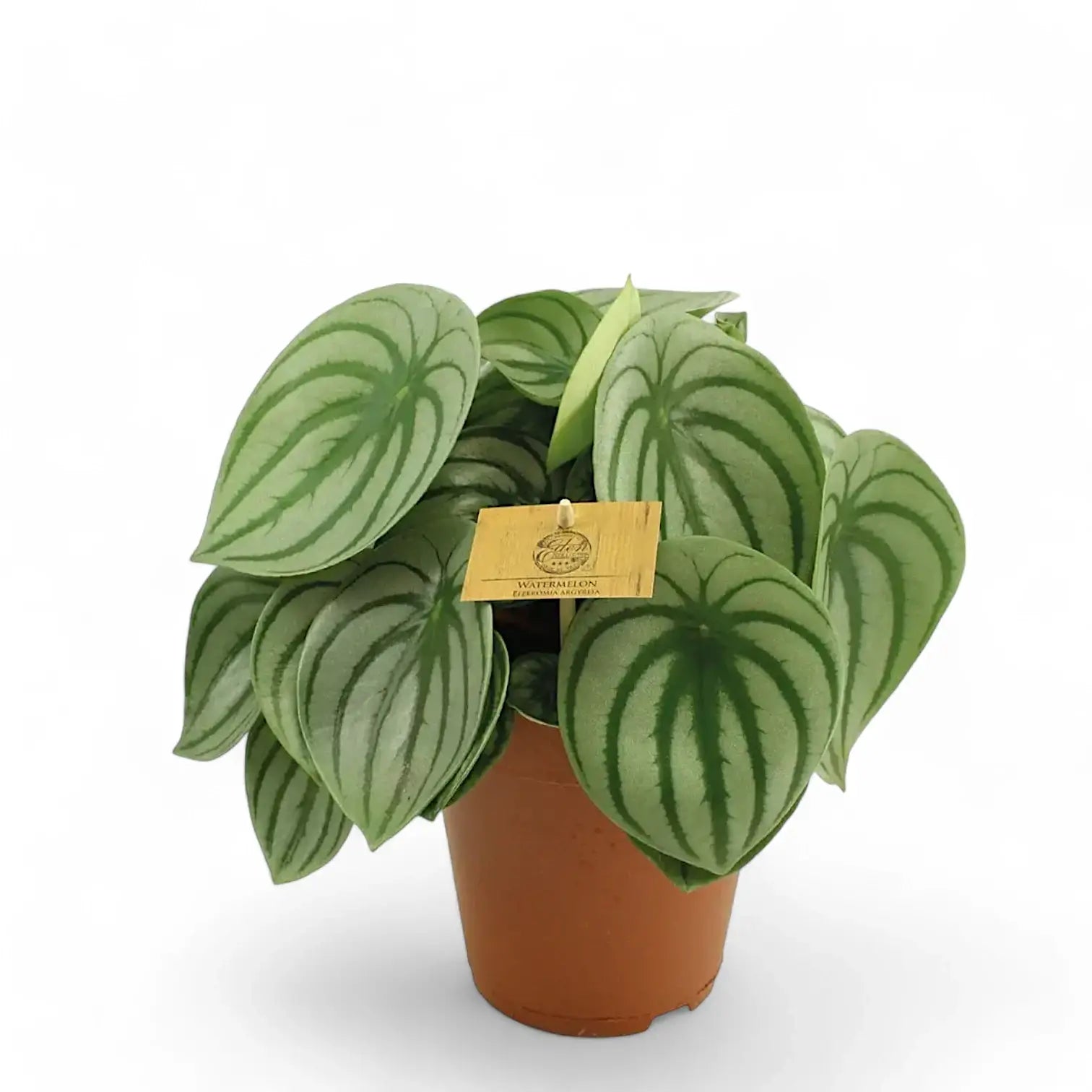
Peperomia argyreia, commonly known as Watermelon Peperomia, is a small tropical foliage plant with rounded leaves held on slim reddish petioles. Each leaf has a peltate attachment, with the petiole meeting the underside of the blade rather than the edge. That gives the plant its umbrella-like leaf display and keeps the patterned blades lifted above the short central stems.
The foliage is instantly recognisable. Pale silver-green bands and deeper green striping run across the rounded leaves, creating the watermelon-rind pattern behind its common name. Growth stays compact indoors, with new leaves rising from the centre and older leaves forming a low, rounded plant rather than a trailing or climbing habit.
Quick plant features
- Leaf pattern: Rounded blades with silver-green striping and darker green bands.
- Leaf attachment: Peltate leaves carried on slender reddish petioles.
- Growth habit: Low, bushy growth from short stems, usually staying compact in a pot.
- Root behaviour: Fine roots that need air around them and dislike dense wet soil.
- Flowers: Mature plants may produce narrow pale flower spikes above the foliage.
Growth, origin and indoor behaviour
The accepted botanical spelling is Peperomia argyraea, while Peperomia argyreia remains widely used in horticulture and plant retail. The species is native to parts of Brazil, where it grows in wet tropical conditions as a subshrub or epiphyte. Indoors, that background matters because the plant likes warmth and gentle moisture, but its roots still need quick drainage and oxygen.
The leaves are slightly fleshy, so the plant can handle a short dry-down better than a waterlogged pot. A small container is usually safer than an oversized one, because excess substrate holds moisture around the fine roots for too long. Stable warmth, filtered light and a breathable mix keep the leaf display neat and firm.
Light, water and root-zone care
- Light: Give bright, indirect light. Too little light makes the petioles stretch, while harsh direct sun can scorch the patterned blades.
- Watering: Water once the top few centimetres of substrate have dried. Limp leaves in wet soil usually point to root stress, not thirst.
- Substrate: Use a fine, airy mix with perlite, pumice, bark fines or mineral grit so the roots stay lightly moist but oxygenated.
- Temperature: Keep around 18–26°C. Avoid cold windowsills, draughts and wet substrate below about 12°C.
- Humidity: Average home humidity is usually workable. In very dry air, a humidifier or grouped plants can support smoother new leaves.
- Feeding: Feed lightly during active growth with a diluted houseplant fertiliser. This is a slow, compact grower and does not need heavy feeding.
- Repotting: Move up only one pot size when the roots have filled the current pot. Too much spare substrate increases rot risk.
- Propagation: Leaf and petiole cuttings can root in a warm, lightly moist, airy medium.
Problems to check early
- Wilting after watering: Slide the root ball out and check for brown, soft or sour-smelling roots before adding more water.
- Long, leaning petioles: Move the plant gradually into brighter indirect light and rotate the pot for more even growth.
- Brown leaf edges: Check for repeated dry-downs, dry heat, fertiliser build-up or a root ball that has become too tight.
- Soft stems near the soil: Remove affected tissue, improve drainage and keep the plant warmer while the root zone recovers.
- Hidden pests: Inspect petiole bases and leaf undersides for mealybugs, scale or mites, especially after shipping.
Safety
Watermelon Peperomia is widely listed as non-toxic to cats and dogs. Keep it away from pets that chew plants heavily, as swallowed leaves can still cause mild digestive upset.
Botanical name background
Peperomia belongs to Piperaceae, the pepper family, and the genus name means pepper-like. The accepted species name, argyraea, refers to a silvery appearance, matching the pale striping across the leaves. The spelling argyreia remains common on plant labels.
Watermelon Peperomia has rounded, silver-striped leaves, reddish petioles, and a compact upright habit for small plant displays.
Shipping Notes
- Free Standard Shipping on $100+ Orders to the USA.
- Except Preorder products are shipped in 48 hours.
- Delivery to the USA:
- Standard Shipping : 3-10 business days
- If time is of the essence, please consider selecting expedited delivery for faster service.
Exchange/Return Notes
- We offer a 30-day return/exchange service after receiving.
- Final sale items are not eligible for returns or exchanges.
- To process your return/exchange, please contact us at [email protected]
- Please click here for more details>>> Return & Exchange Policy